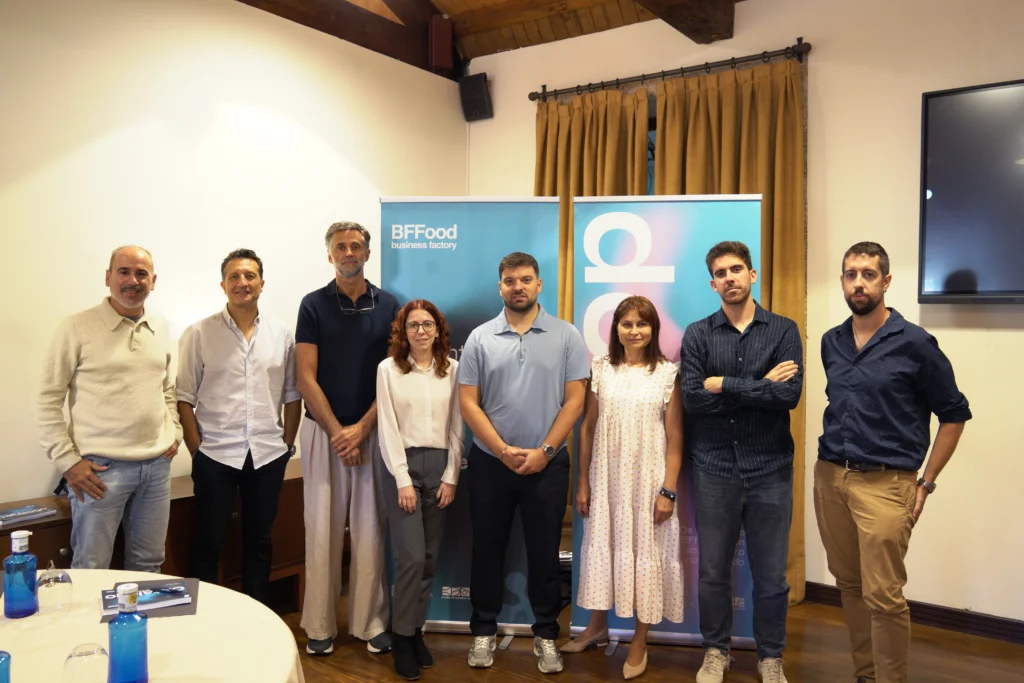


The Demo Day of the 7th Edition of Business Factory Food was held on 23 September at the Palacio del Carmen Hotel, where startups presented progress […]
High-tech incubators: where the future of innovative companies is born
11/08/2025
In a global environment marked by technological transformation, the climate crisis, and changes in production and consumption models, entrepreneurship emerges as a brave and necessary response. Increasingly, disruptive ideas seeking to provide solutions to society’s challenges are born from entrepreneurs who need support, resources, and specialized knowledge to turn those ideas into real, sustainable, and scalable business projects. This is where high-tech incubators come into play.
Incubators have ceased to be merely physical spaces and have become true innovation ecosystems. They are living environments where connections are generated between people and organizations with different profiles but a common goal: to accelerate innovation, promote technology transfer, and transform knowledge into economic and social value. They are places where science, technology, capital, and talent dialogue, collaborate, and co-create solutions for the strategic sectors of the present and the future.
The latest report from the INCYDE Foundation, which leads the largest network of incubators in Europe, includes figures that clearly reflect this impact: more than 7,600 companies boosted in Spain, nearly 150,000 jobs created, and 198 active infrastructures spread across the country. These figures not only demonstrate the dynamism of the Spanish entrepreneurial ecosystem but also its capacity to generate territorial development, industrial modernization, and social cohesion.
High-tech incubators function as catalysts. They not only offer specialized advice and mentoring in the most critical phases of a business project—definition, validation, and market entry—but also provide access to advanced facilities, laboratories, investment networks, and specific training adapted to the needs of each sector. All this within a collaborative framework where entrepreneurs, universities, technology centers, large companies, and public institutions coexist.
But beyond their economic role, incubators have a social and strategic function of the highest order. They allow for the retention and attraction of talent, especially in peripheral or rural territories, and contribute to strengthening the innovative capacity of the local productive fabric. Many of them, such as those forming part of the INCYDE network, specialize in key sectors such as biotechnology, health, the blue economy, or the agri-food sector, with a clear commitment to aligning innovation with the Sustainable Development Goals and the principles of inclusion, equality, and sustainability.
In this context, Business Factory Food (BFFood) stands out as a strategic accelerator in the food sector. A pioneering project in Galicia that combines the leadership of anchor companies, the expertise of knowledge centers, and entrepreneurial vision to create a fertile space where innovative solutions in the agri-food sector flourish. Through its incubation, acceleration, and consolidation programs, BFFood accompanies startups that are rethinking the food value chain, integrating criteria of sustainability, digitization, productive efficiency, and food sovereignty.
BFFood’s commitment is not only technological; it is also a commitment to the territory, to public-private collaboration, and to Galicia’s capacity to lead the change toward a more resilient and sustainable food model. Accumulated experience shows that incubators and accelerators can be true engines of transformation if they have a clear sectoral focus, institutional support, and solid alliances between diverse agents.
Therefore, in a time of change and opportunity, it is necessary to reinforce these infrastructures, highlight their impact, and continue investing in their consolidation as spaces that not only incubate companies but also the future.
Share this news

Other news you might be interested in

The event will take place on September 23 at the Palacio del Carmen Hotel in Santiago de Compostela It will bring together projects from the 7th edition […]

The session will take place on September 11 at 1:00 PM Business Factory Food (BFFood), a leading program in Galicia for the incubation, acceleration, and […]